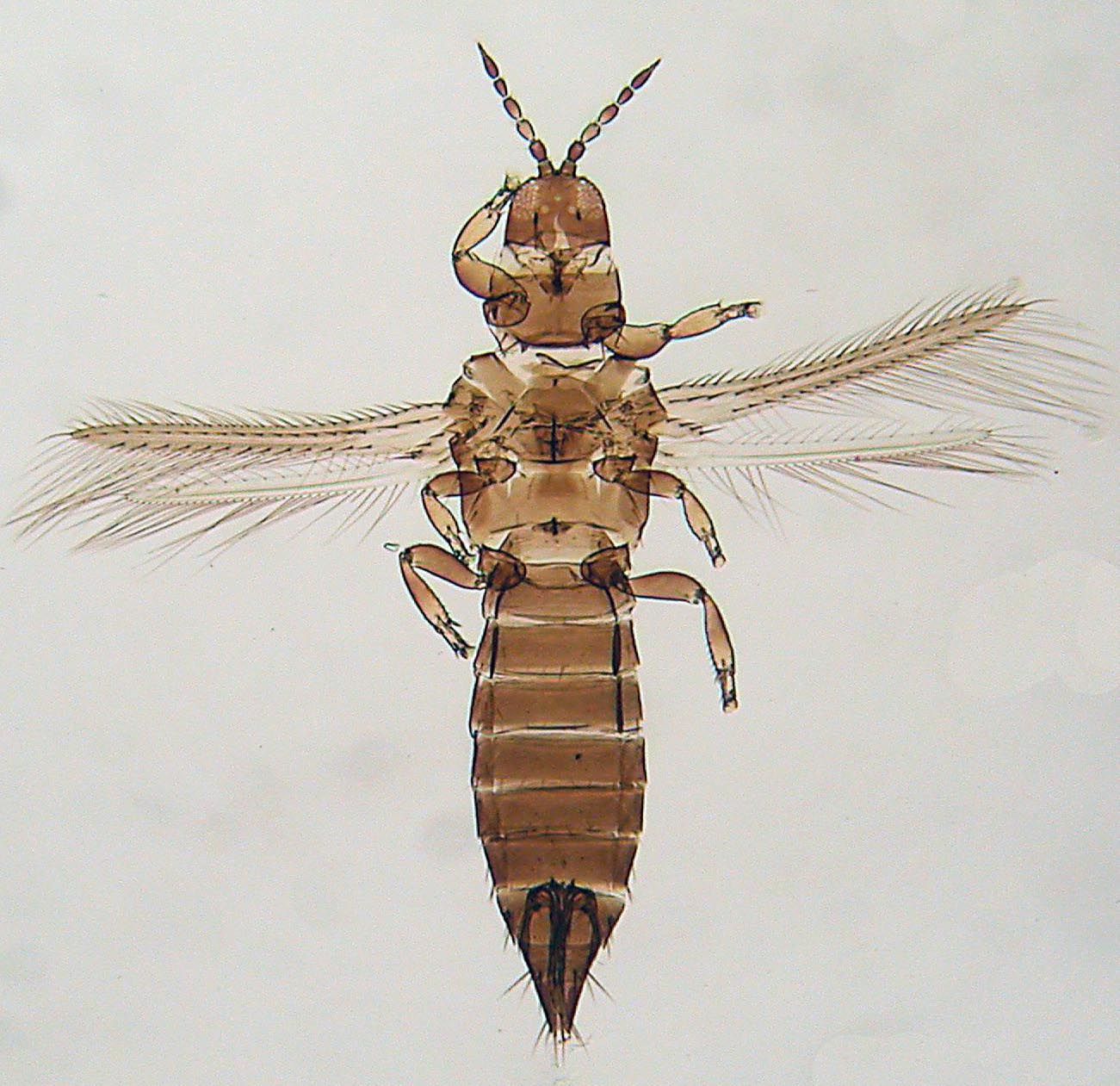
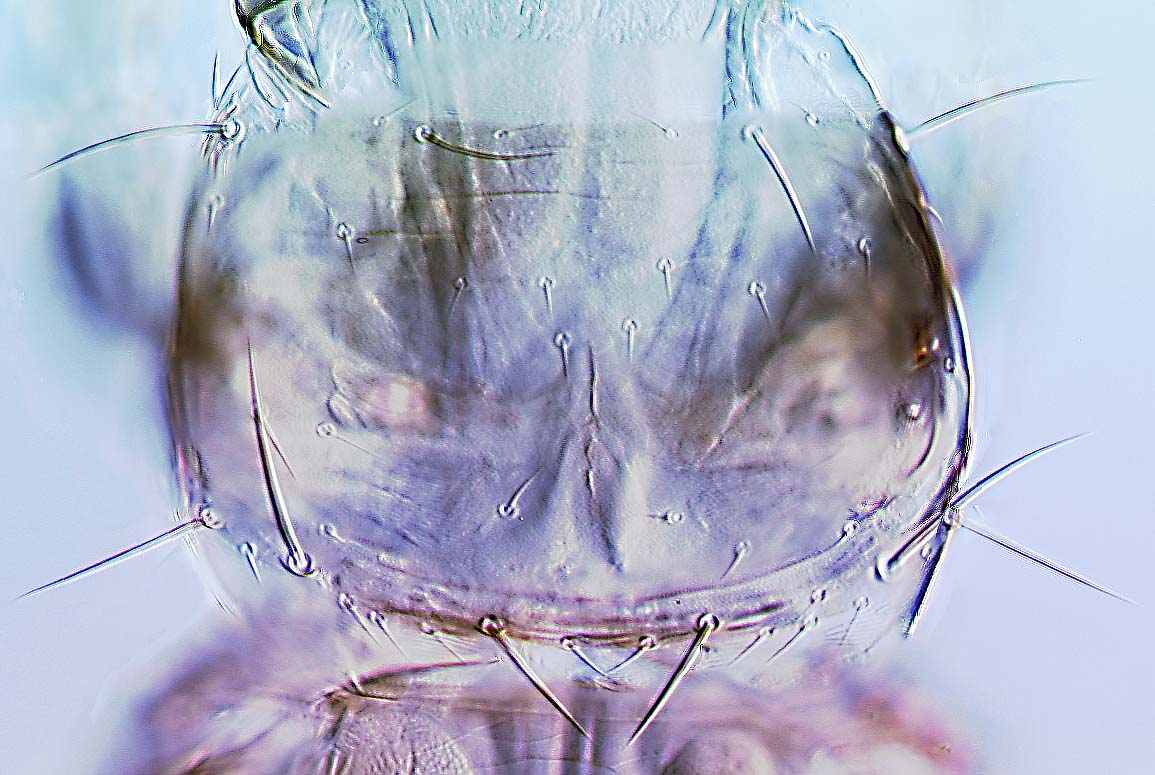
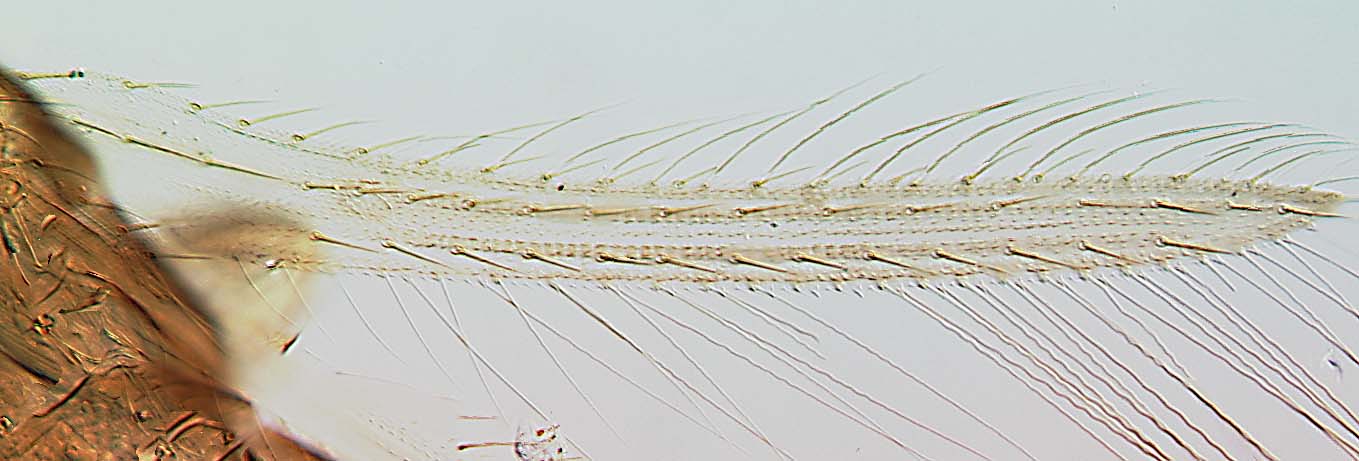
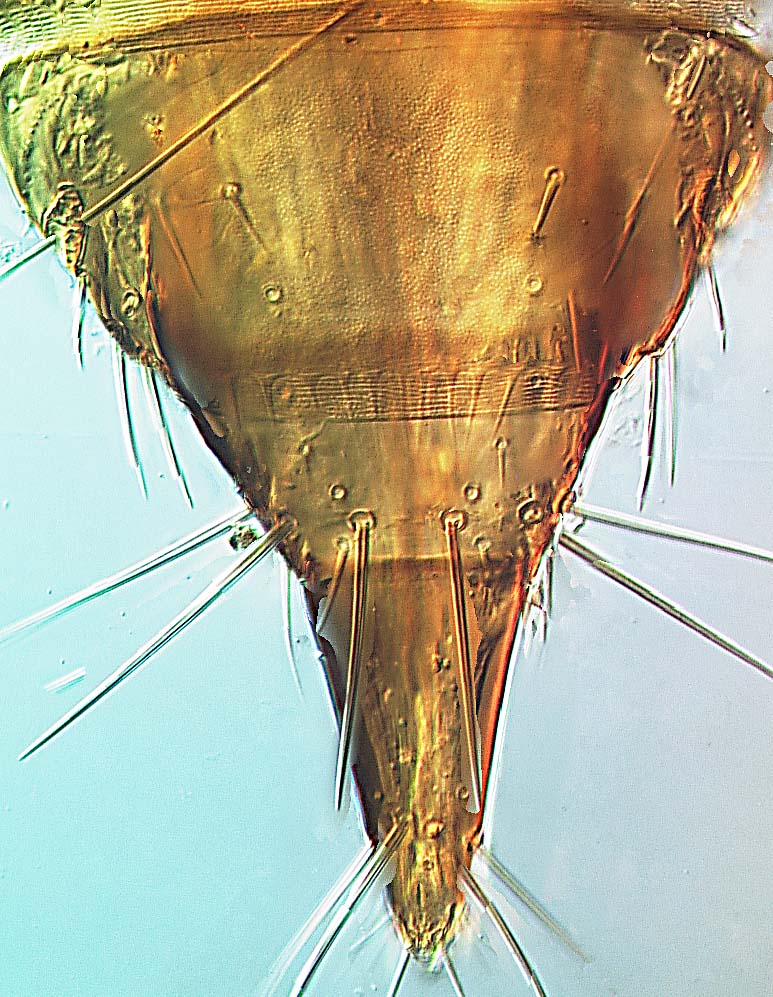
Body brownish yellow, tibiae paler and tarsi yellow; antennal segments II & VI–VIII brown, III–IV yellowish brown, V brown but with a short pale area basally; fore wings light brown and somewhat paler basally. Head with three pairs of ocellar setae, pair III short, arising just within lateral margins of ocellar triangle. Antennae 8-segmented, III & IV with forked sense cones; III with simple pedicel. Pronotum not sculptured, with two pairs of well-developed posteroangular setae; anteroangular and anteromarginal setae relatively short. Mesothoracic spinula long, metathoracic spinula absent. Metanotum with transverse lines of reticulation anteriorly, reticulate posteromedially; campaniform sensilla present; two pairs of setae arising at anterior margin. Tarsi 2-segmented. Fore wing with first and second rows of setae complete and closely spaced. Abdominal tergites V–VIII with ctenidia laterally, ctenidia on VIII anterolateral to spiracle; VIII with a posteromarginal comb of microtrichia; tergite X at least 1.4x times longer than IX. Sternites without discal setae, with three pairs of long posteromarginal setae. Both sexes fully winged.
Male paler, with transverse pore plate on abdominal sternites III–VII.
Intraspecific variation
Campaniform sensilla on metascutum sometimes absent.
Genus and similar species information
Frankliniella is one of the largest genera amongst Thysanoptera, comprising more than 160 described species. About 90% of the species are from the Neotropics and their taxonomy is usually complex. Almost all members have 8-segmented antennae, three pairs of ocellar setae and fore wing with both rows of setae complete. About 40 species are recorded from Brazil, and almost half of these were described from this country. Frankliniella oxyura belongs to the informal minutagroup and it is similar in structure to fuscicornis, but this species has shaded fore wings, and abdominal segment IX is remarkably shorter than X. A key to Frankliniella species recorded from Brazil is provided by Cavalleri & Mound (2012).
World distribution
Described from Paraguay, it is also recorded from Argentina and Brazil.
Breeding on flowers. Adults are frequently collected in Asteraceae, but no host plant data is available.
Economic importance
Not recorded.
References suggested
Cavalleri A & Mound LA (2012) Toward the identification of Frankliniella species in Brazil (Thysanoptera, Thripidae). Zootaxa 3270: 1–30.
Sakimura K, & O’Neill K (1979) Frankliniella, redefinition of genus and revision of minuta group species (Thysanoptera: Thripidae). Washington DC: US Department of Agriculture Technical Bulletin 1572 pp. 1–49.
Published in: 28/12/2016 Posted by: Mariana Lindner